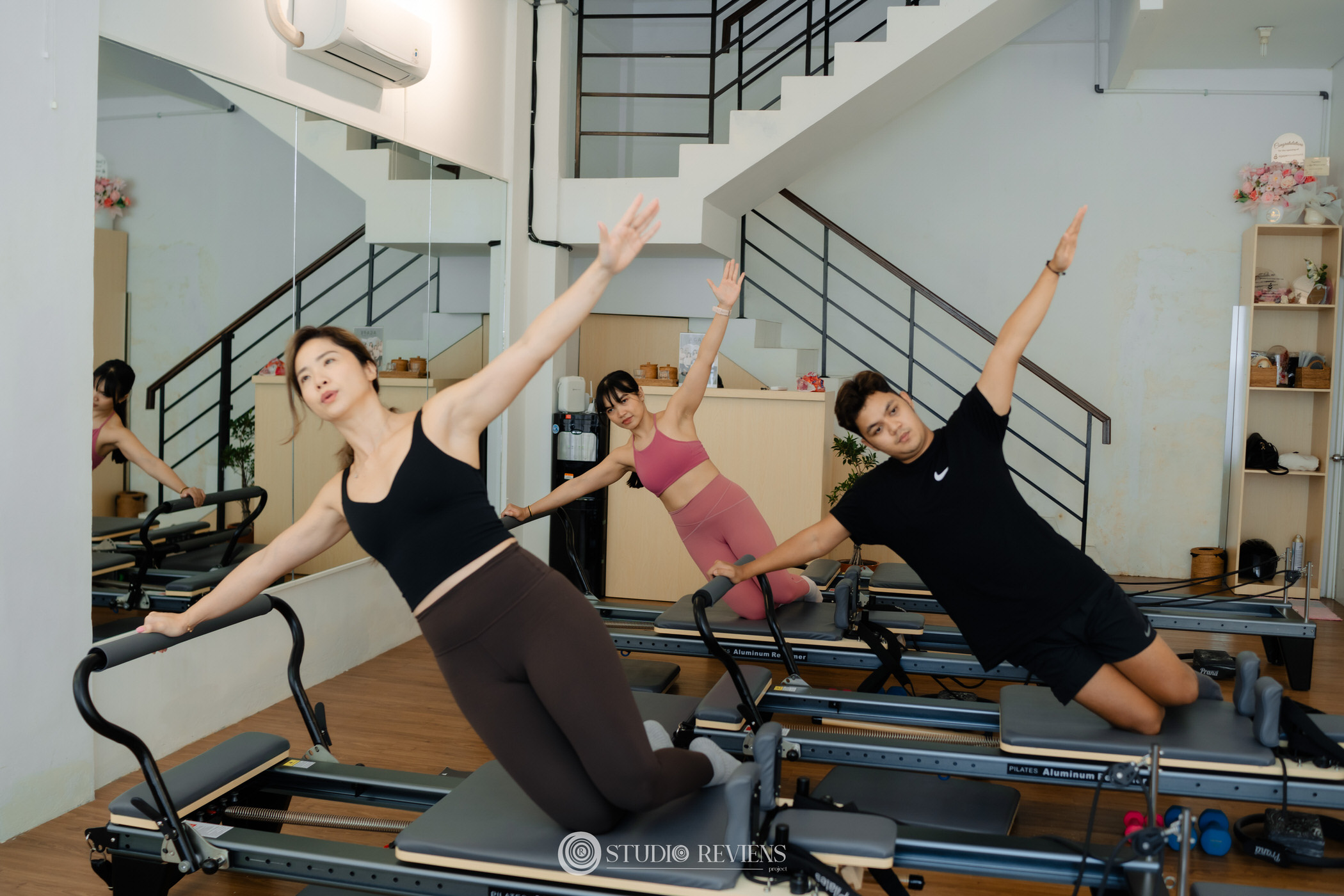
You may have seen people moving on a Pilates Reformer and wondered what all the springs, straps, and moving parts actually do. The equipment can look unfamiliar at first, especially if you have never taken a Pilates class before.
The good news is that you do not need to understand every part of the Reformer before your first session. With guidance from an experienced instructor, the equipment becomes a useful way to explore controlled movement, build strength, and develop greater awareness of how your body moves.
What Is Reformer Pilates?
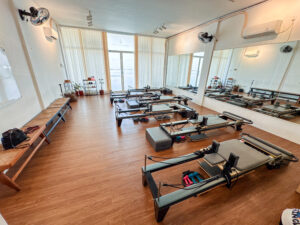
Reformer Pilates is a form of Pilates performed on a specialised piece of equipment called a Reformer. The machine includes a moving platform, springs that provide resistance, straps or ropes, a footbar, and shoulder supports.
Think of the Reformer as a moving platform that gives your body both support and resistance. Instead of relying only on body weight, you work with the movement of the carriage and the tension of the springs to practise exercises with control.
Pilates focuses on more than simply completing a certain number of repetitions. It encourages you to pay attention to breathing, alignment, stability, and the quality of each movement. Pilates generally combines controlled movement, breathing, concentration, and attention to body alignment.[3] The goal is not necessarily to move as quickly or as heavily as possible. It is to understand how your body is working and make each movement more intentional.
The Pilates Foundation describes Pilates as exercise that develops strength, mobility, balance, and body awareness through controlled, purposeful movement. The method can be adapted for different levels of experience, which is one reason it can be a comfortable starting point for beginners.[1]
How Does a Pilates Reformer Work?
The Reformer’s moving carriage slides along a frame. Springs connected to the carriage create resistance, while the footbar and straps give you different ways to position and support your body.
The springs can make an exercise feel more challenging, but they can also provide assistance. This is an important part of understanding the equipment. Resistance is not simply about making every exercise harder. It can also help you find a smoother movement path or practise a position with more support.
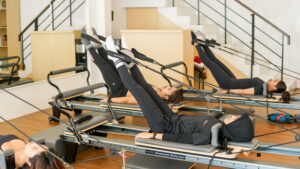
During a class, you may work:
- Lying on your back
- Sitting on the carriage
- Kneeling
- Standing beside or on the Reformer
- Using the footbar
- Holding the straps with your hands or feet
The instructor will help you adjust the equipment and choose the right spring setting for the exercise. You may also receive cues about your breathing, pelvic position, shoulder placement, or the way you stabilise your body.
So, what actually happens when the carriage moves?
Your body needs to respond to the moving surface while keeping the rest of the movement organised. This creates an opportunity to practise coordination, balance, and core control. Over time, many people find that this attention to detail helps them become more aware of how they move both inside and outside the studio.
What Can Reformer Pilates Support?
Reformer Pilates can support a range of movement goals, including strength, mobility, posture, balance, and body awareness. The experience can be different for every person, depending on your current movement habits, goals, and consistency.
These are some of the movement qualities Reformer Pilates can support through consistent, controlled practice. For a closer look at how the practice may support strength, core control, mobility, flexibility, posture, balance, and body awareness, read our guide to the benefits of Reformer Pilates.
Strength and stability
The springs provide resistance as you push the carriage away or control its return. Depending on the exercise, this may challenge your legs, arms, shoulders, back, or trunk.
Think of your core as the centre that helps organise movement throughout the rest of your body. In Reformer Pilates, core control does not mean holding your stomach tightly throughout the entire class. It means learning to support your body while allowing the arms and legs to move with control.
Mobility and range of motion
Mobility is not simply about being flexible. It is about having enough range of motion to move with control.
The Reformer can provide support while you explore different positions. For example, a strap may help guide the movement of your legs while you focus on keeping your pelvis steady. The equipment can make it easier to notice where you have freedom of movement and where you may benefit from a slower, more considered approach.
Posture and alignment
Many Reformer exercises involve paying attention to the relationship between the head, shoulders, ribs, pelvis, and legs. This does not mean there is one perfect posture for everyone. Instead, you learn how to organise your body for a particular movement.
A consistent Pilates practice can help you become more aware of habits such as rounding your shoulders, shifting your weight, or holding tension in the neck. That awareness can support more intentional movement during everyday activities.
Balance and coordination
The moving carriage creates a different environment from a stable mat or floor. You may need to coordinate your breathing, arm position, leg movement, and carriage control at the same time.
This can feel challenging in the beginning, but it is also part of what makes Reformer Pilates engaging. You are not just moving through an exercise. You are learning how different parts of your body work together.
Body awareness
A Pilates class gives you time to notice how movement feels. You may become aware of where you feel stable, where you hold unnecessary tension, or which muscles are helping you complete an exercise.
This body awareness is not about judging yourself. It is about gathering useful information. The more clearly you understand your movement, the easier it can be to make adjustments and find an approach that works for you.
Research on Pilates has found cautious support for improvements in areas such as flexibility, abdominal and lumbo pelvic stability, and muscular activity, although the strength of evidence varies between topics and studies.[2] For this reason, it is helpful to think of Pilates as a movement practice rather than a guaranteed solution or medical treatment.
What to Expect in Your First Reformer Pilates Class
If you have never attended a Reformer Pilates class, it is normal to feel unsure about what to bring, what to wear, or how difficult the session will be.
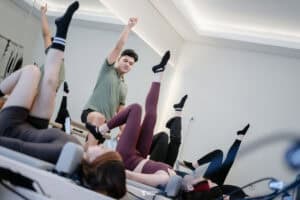
A beginner class may include:
- An introduction to the equipment: Your instructor may explain the carriage, springs, footbar, straps, and safety considerations.
- A warm up: You may begin with simple movements to connect with your breathing, feet, spine, and pelvis.
- Foundational exercises: These may include footwork, arm or leg movements with straps, bridging, or gentle core focused exercises.
- Movement cues and adjustments: The instructor may offer verbal instructions or small equipment adjustments to help you understand the exercise.
- A controlled cool down: The class may finish with slower movements, stretches, or breathing work.
At Agape Movement, Pilates classes run for approximately 50 minutes, including a structured warm up and cool down. Beginners are welcome, and instructors are available to guide you through each stage of the session.
Is Reformer Pilates Suitable for Beginners?
Yes. You do not have to be flexible, athletic, or experienced to begin Reformer Pilates.
A beginner friendly class should give you time to understand the equipment and practise the foundations before moving into more complex exercises. Your instructor can offer modifications based on your experience and help you work at a pace that feels appropriate.
It can be helpful to tell your instructor if:
- You are completely new to Pilates
- You have not exercised for some time
- You feel unsure about a particular movement
- You are pregnant or recently gave birth
- You have an injury or medical concern
- You experience pain during an exercise
Pilates is generally adaptable, but a studio class is not a substitute for individual medical advice. If you have a health condition, recent injury, or ongoing pain, consider speaking with a qualified healthcare professional before beginning a new exercise routine. During class, let your instructor know if a movement feels painful, sharp, or otherwise concerning.
If you are still wondering whether Reformer Pilates is the right starting point for your current fitness level, read our guide to whether Reformer Pilates is good for beginners. It explores common concerns, flexibility requirements, and how to choose a beginner friendly class.
A Quick Checklist for Your First Class
Before your first Reformer Pilates session, you may find it useful to remember the following:
- Wear comfortable clothing that allows you to move freely.
- Arrive a little early so you can become familiar with the studio.
- Tell your instructor that you are new to Reformer Pilates.
- Listen to the equipment instructions before beginning.
- Focus on controlled movement rather than speed.
- Breathe naturally and avoid holding your breath.
- Ask questions if you are unsure about a position.
- Work within a range of motion that feels manageable.
- Notice how the movement feels instead of comparing yourself with others.
- Give yourself time to learn the equipment.
You do not need to perform every exercise perfectly. Your first class is an opportunity to become familiar with the method and begin building a stronger movement foundation.
How Often Should You Practise Reformer Pilates?
There is no single schedule that works for everyone. The right frequency depends on your routine, goals, experience, and how your body responds to the classes.
Some people begin with one class each week to become comfortable with the equipment. Others prefer a more regular schedule once they understand the basic movements. Consistency is often more useful than trying to do too much at once.
Think of a movement practice like building a habit. One class can introduce you to new movements, but regular practice gives you more opportunities to improve control, recognise patterns, and develop confidence.
If you are ready to explore the format further, you can view the available Pilates Classes at Agape Movement and find a program that suits your goals.
Finding the Right Place to Begin
The best starting point is a class where you feel supported, informed, and comfortable asking questions. A welcoming studio should make space for different levels of experience rather than expecting everyone to move in exactly the same way.
At Agape Movement, all levels are welcome. Our instructors use thoughtful guidance to help you explore movement at your own pace, whether you are taking your first Reformer Pilates class or returning to a practice you already enjoy.
Reformer Pilates is one way to practise Pilates, but it is not the only format available. If you are also considering Mat Pilates, our guide to Reformer Pilates vs Mat Pilates explains how the two formats differ in equipment, resistance, accessibility, and movement experience.
When you are ready, explore an Agape Movement Pilates studio near you. You can also contact your nearest studio if you would like help choosing a class or understanding what to expect.
Reformer Pilates is not about forcing your body into a particular shape or chasing a perfect performance. It is about learning to move with more intention, building strength and control gradually, and finding a movement practice that feels useful in your everyday life.
Your first class does not have to be perfect. It only needs to be a comfortable place to begin.
Footnotes
- Pilates Foundation. “About Pilates.” Accessed October 2026.
- Kloubec, June. “Pilates: How Does It Work and Who Needs It?” Muscles, Ligaments and Tendons Journal, 2011. Available through PubMed Central.
- Cleveland Clinic. “Pilates 101: What It Is and Health Benefits.” Published March 10, 2023.