
What Are the Benefits of Reformer Pilates?
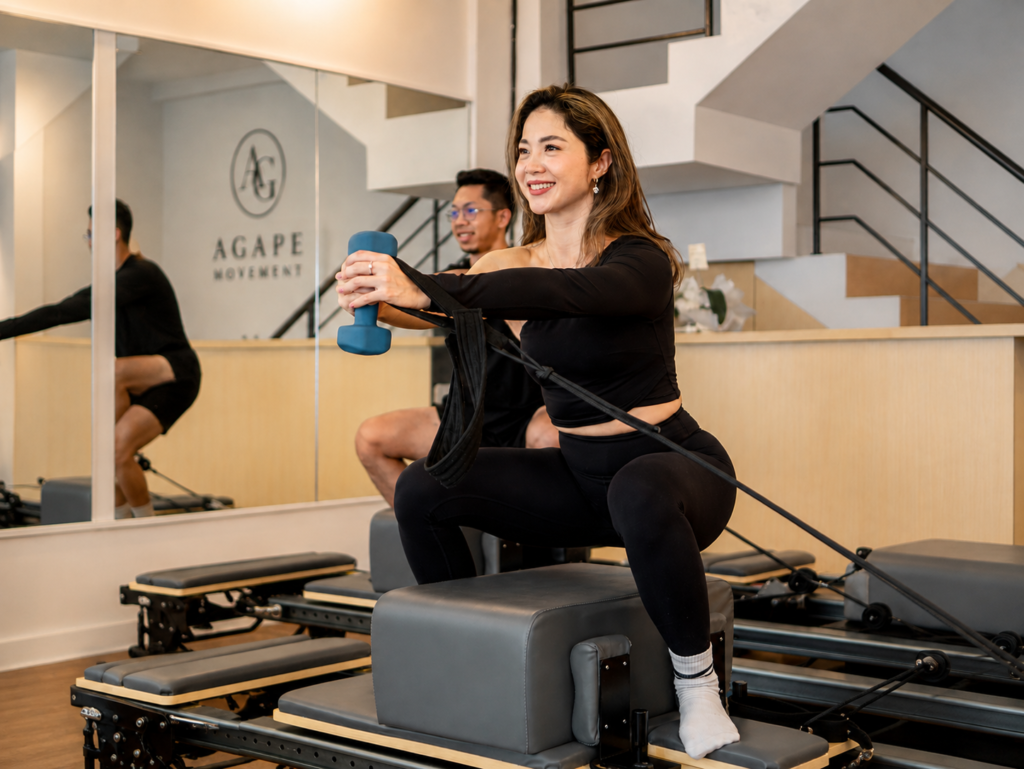
Reformer Pilates is often associated with controlled movement, core work, and improved body awareness. But what are the benefits of Reformer Pilates beyond simply completing a workout?
The Reformer adds adjustable spring resistance, a moving carriage, straps, and other forms of support to the Pilates method. These features can create a different movement experience from traditional mat based Pilates and allow exercises to be adapted to different goals and ability levels.
Here are some of the ways Reformer Pilates may support strength, mobility, flexibility, balance, posture, and more.
What Makes Reformer Pilates Different?
One of the main features of Reformer Pilates is the equipment itself.
The Reformer uses springs to create adjustable resistance while the carriage moves along rails. The straps, footbar, and carriage can also provide support or challenge depending on how an exercise is performed.
This combination allows movements to be performed with controlled resistance rather than relying only on bodyweight.
For a broader comparison of the equipment and movement experience, see our guide to Reformer Pilates vs Mat Pilates: what’s the difference?.
1. It Can Support Full Body Strength
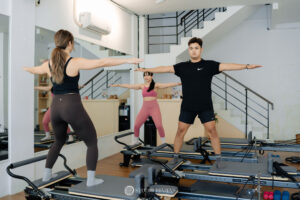
Reformer Pilates can involve many areas of the body during a single session.
Exercises may target the legs, hips, core, back, shoulders, and arms. Because the springs provide resistance, muscles need to work against an external load while maintaining control of the movement.
The level of resistance can also be adjusted, allowing exercises to be progressed or modified according to the individual’s needs.
Rather than focusing only on one muscle group, Reformer sessions can provide a more integrated approach to strength and movement.
2. It Can Develop Core Control
Core control is one of the central principles of Pilates.
During Reformer exercises, the body often needs to remain stable while the arms or legs move. Maintaining this control requires coordination between the trunk and the rest of the body.
The moving carriage can add another layer of challenge because the body has to manage movement while maintaining a stable position.
Over time, consistent practice may help develop greater awareness of how the core supports different movements.
3. It Can Support Mobility
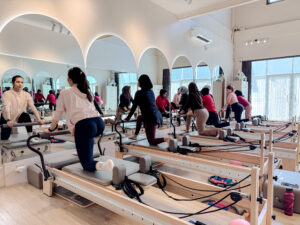
Mobility refers to the ability to move a joint through an available range of motion with control.
Reformer Pilates can combine controlled movement with resistance and support. This can allow people to explore movement ranges while maintaining stability and technique.
The straps and carriage can also provide assistance during certain exercises, making it possible to work through movements in a controlled way.
Mobility work does not need to mean forcing a joint into a deeper position. The focus is often on moving with awareness and control.
4. It Can Encourage Flexibility
Flexibility and mobility are related but are not exactly the same.
Flexibility generally refers to the ability of muscles and other tissues to lengthen, while mobility also involves how well a person can actively control movement through a range of motion.
Reformer Pilates can include movements that challenge muscles through lengthened positions. The equipment can also provide support while a person explores different ranges of movement.
With consistent practice, this may contribute to greater comfort and control when moving through everyday positions.
5. It Can Improve Balance and Coordination
Balance is not only about standing on one leg.
It also involves coordinating different parts of the body while maintaining control and stability.
Reformer exercises can challenge balance by changing the position of the body, introducing resistance, or requiring the arms and legs to move independently.
Because the carriage can move underneath the body, some exercises require continuous adjustment and coordination.
This makes the Reformer a useful environment for practising controlled balance and movement coordination.
6. It Can Support Posture and Alignment Awareness
Reformer Pilates often places attention on body position and alignment.
Instructors may provide cues about the position of the spine, pelvis, shoulders, hips, and limbs during different exercises.
This does not mean that Pilates creates one perfect posture. Instead, the practice can help people become more aware of how they position and control their bodies during movement.
Greater awareness can be useful both during exercise and when performing everyday movements.
7. It Can Build Body Awareness
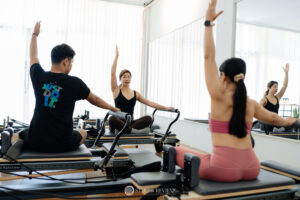
Another potential benefit of Reformer Pilates is improved awareness of how the body moves.
Exercises often require attention to breathing, alignment, muscle engagement, tempo, and coordination at the same time.
This encourages people to pay attention to movement rather than simply completing a certain number of repetitions.
Over time, that attention may help people better understand how their body responds to different positions, movements, and levels of resistance.
8. It Can Encourage More Controlled Movement
Reformer Pilates is generally performed with an emphasis on controlled movement rather than speed.
The carriage, springs, and straps provide feedback throughout an exercise. Moving too quickly or losing control can change how the equipment responds.
This can encourage participants to slow down and pay attention to the quality of each repetition.
For people who are interested in learning more about the class experience itself, see our guide to what to expect in your first Reformer Pilates class.
9. It Can Support Exercise Consistency
The benefits of any exercise practice are closely connected to consistency.
Reformer Pilates can offer variety through different exercises, spring settings, movement patterns, and class structures. This can make it easier for some people to maintain an exercise routine that they enjoy.
Consistency also allows people to become more familiar with the equipment and gradually develop better movement control.
Rather than focusing only on short term results, regular practice can provide an opportunity to build a sustainable movement routine.
Do the Benefits Vary Between People?
Yes. The experience and potential benefits of Reformer Pilates can vary depending on factors such as training frequency, previous exercise experience, movement ability, goals, and how sessions are structured.
A beginner attending one class may have a very different experience from someone who has practised Pilates for several years.
The equipment and exercises can also be modified to provide more support or more resistance depending on the individual and the exercise being performed.
For this reason, it is more useful to think about Reformer Pilates as a flexible movement practice rather than a single type of workout with identical results for everyone.
What About Beginners?
You do not necessarily need to be strong, flexible, or experienced to start Reformer Pilates.
Beginner classes can introduce the equipment, basic movement principles, and fundamental exercises gradually.
If you are unsure whether Reformer Pilates is appropriate for your current level, our guide Is Reformer Pilates good for beginners? covers common concerns and what to consider before starting.
As with any exercise program, people with existing injuries, medical conditions, persistent pain, or specific rehabilitation needs should seek appropriate professional guidance before beginning.
How to Make the Most of the Practice
Getting the most from Reformer Pilates is not necessarily about choosing the hardest spring setting or performing the most advanced exercises.
Instead, focus on:
- Learning the fundamentals
- Following your instructor’s cues
- Maintaining control throughout each movement
- Using an appropriate resistance level
- Breathing consistently
- Progressing gradually
- Practising consistently
Good technique and appropriate progression are generally more important than simply making an exercise more difficult.
INSTRUCTOR TIPS
“The benefits of Reformer Pilates aren’t about making every exercise harder. Good movement starts with control, appropriate resistance, and understanding how your body responds. With consistent practice, you can gradually build strength, mobility, and confidence in how you move.”
Gilang, Agape Movement Instructor
Explore Pilates Classes at Agape Movement
Reformer Pilates can offer a combination of resistance, support, controlled movement, and body awareness.
Whether your goal is to build strength, explore mobility, improve coordination, or develop a more consistent movement routine, the Reformer provides a versatile environment for practising Pilates.
Explore the Pilates programs at Agape Movement or find a location through our studio directory.
Important: Reformer Pilates can support different aspects of movement and exercise, but individual results vary. If you have an injury, medical condition, ongoing pain, or specific rehabilitation needs, consult an appropriate healthcare professional before starting a new exercise routine.
Footnotes
- Pilates Foundation, “About Pilates.” https://www.pilatesfoundation.com/about-pilates
- Kloubec, June. “Pilates: How Does It Work and Who Needs It?” Muscles, Ligaments and Tendons Journal, 2011. https://pmc.ncbi.nlm.nih.gov/articles/PMC3666467/
- Cleveland Clinic, “Pilates 101: What It Is and Health Benefits.” https://health.clevelandclinic.org/everything-you-want-to-know-about-pilates